
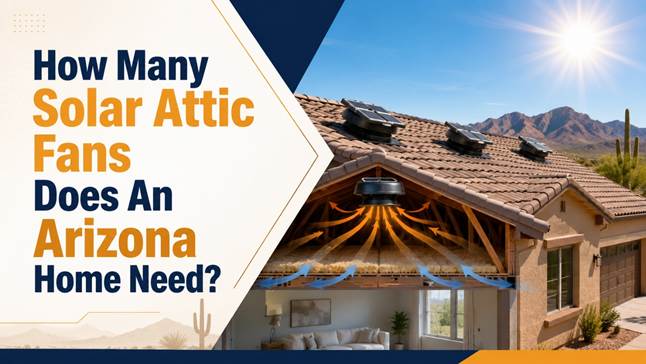
During an Arizona August, the roof absorbs intense sunlight for hours and the attic can hold heat late into the day. A solar attic fan can move hot air outdoors without drawing electricity from the home. Choosing the right number of fans, however, requires more than checking the total square footage of the house.
Attic size, roof layout, intake ventilation, insulation, and fan capacity all affect the answer. The goal is useful airflow without leaving hot areas untouched or pulling conditioned air through gaps in the ceiling.
Start With The Attic Area
Attic size is the first consideration. Elite Solar Systems offers a 20 watt fan intended for spaces up to 2,000 square feet and a 30 watt fan intended for spaces up to 2,500 square feet. These figures provide a starting point, but the attic may not match the home’s living area.
A two story home may have a smaller attic footprint than its total interior square footage. An addition, attached garage, or divided roof may also create separate attic sections. Air cannot move effectively through solid walls or sealed framing.
For a simple, open attic, one correctly sized fan may provide suitable coverage. A large or divided attic may need two units placed where each can serve a separate area.
Check The Existing Intake Vents
An exhaust fan can only move air effectively when replacement air can enter the attic. That air should normally arrive through low intake openings, such as soffit vents, while warmer air exits higher on the roof.
Soffit vents may become blocked when insulation covers the openings or debris collects behind the screens. Adding another exhaust fan does not correct a lack of intake air and may instead create negative pressure.
The United States Department of Energy recommends balanced attic ventilation, with outside air entering low and leaving high. Before choosing a fan, the intake vents should be inspected for their number, location, and condition.
Consider Roof Shape And Solar Exposure
Two homes with the same attic area may require different solutions. A long roof can develop distant pockets of trapped heat. Multiple roof levels, hips, valleys, and additions may also restrict airflow between sections.
The solar panel needs good sun exposure during peak heat. Shade from trees, chimneys, neighboring buildings, or rooftop equipment can reduce output. Elite solar attic fans use adjustable panels, allowing the angle to be positioned for better exposure.
Roof material matters as well. Tile, shingle, and flat roofs require suitable mounting and flashing methods to protect the roof opening from water intrusion.
Do Not Replace Insulation With Ventilation
Solar attic ventilation can be one part of a heat management plan, but it does not replace insulation or attic air sealing. Gaps around recessed lights, ceiling fixtures, attic access panels, and plumbing penetrations can allow conditioned air to escape into the attic.
An oversized exhaust system can make those leaks more important by lowering attic pressure. The Department of Energy advises checking for air leakage between the home and attic and confirming that ample outside venting is available when attic exhaust fans are used.
Fan sizing should therefore be considered together with insulation, soffit airflow, duct condition, and ceiling air sealing.
When Two Fans May Be Better Than One
Two smaller fans may be appropriate when the attic is divided, unusually long, or larger than the rated coverage of one unit. They may also improve distribution when one roof position cannot serve the entire attic.
More fans are not always better. Total airflow must remain compatible with the intake ventilation. Placement and capacity should be based on the attic rather than bedroom count or house size alone.
Find The Right Solar Attic Fan For Your Project
Elite Solar Systems has manufactured tubular skylights and solar powered fans in Chandler since 2001. Our 20 watt and 30 watt solar attic fans are designed for residential and commercial applications, with durable aluminum components, adjustable solar panels, and options for different roof types. Call Elite Solar Systems at (866) 772 5418 to discuss your attic size, roof layout, or contractor project and choose the right fan capacity for dependable Arizona ventilation.
References
Elite Solar Systems: Solar Attic Fans
Elite Solar Systems: Solar Attic Fan Brochure
Elite Solar Systems: About The Company
United States Department Of Energy: Guide To Attic Air Sealing
United States Department Of Energy: Managing Airflow And Water Vapor
