The first hard rain of summer has a way of finding every weak spot on an Arizona roof. That naturally makes some homeowners nervous about adding a solar tube. It creates an opening in the roof, after all. Could monsoon rain come through it?
A good solar tube is built to handle ordinary weather, including heavy rain. The trouble usually begins when the wrong flashing is used, the installation does not suit the roof, or nearby roofing materials are already damaged.
In other words, the solar tube itself is not normally the problem.
Rain Has to Be Directed Around the Tube
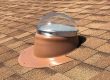
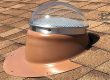
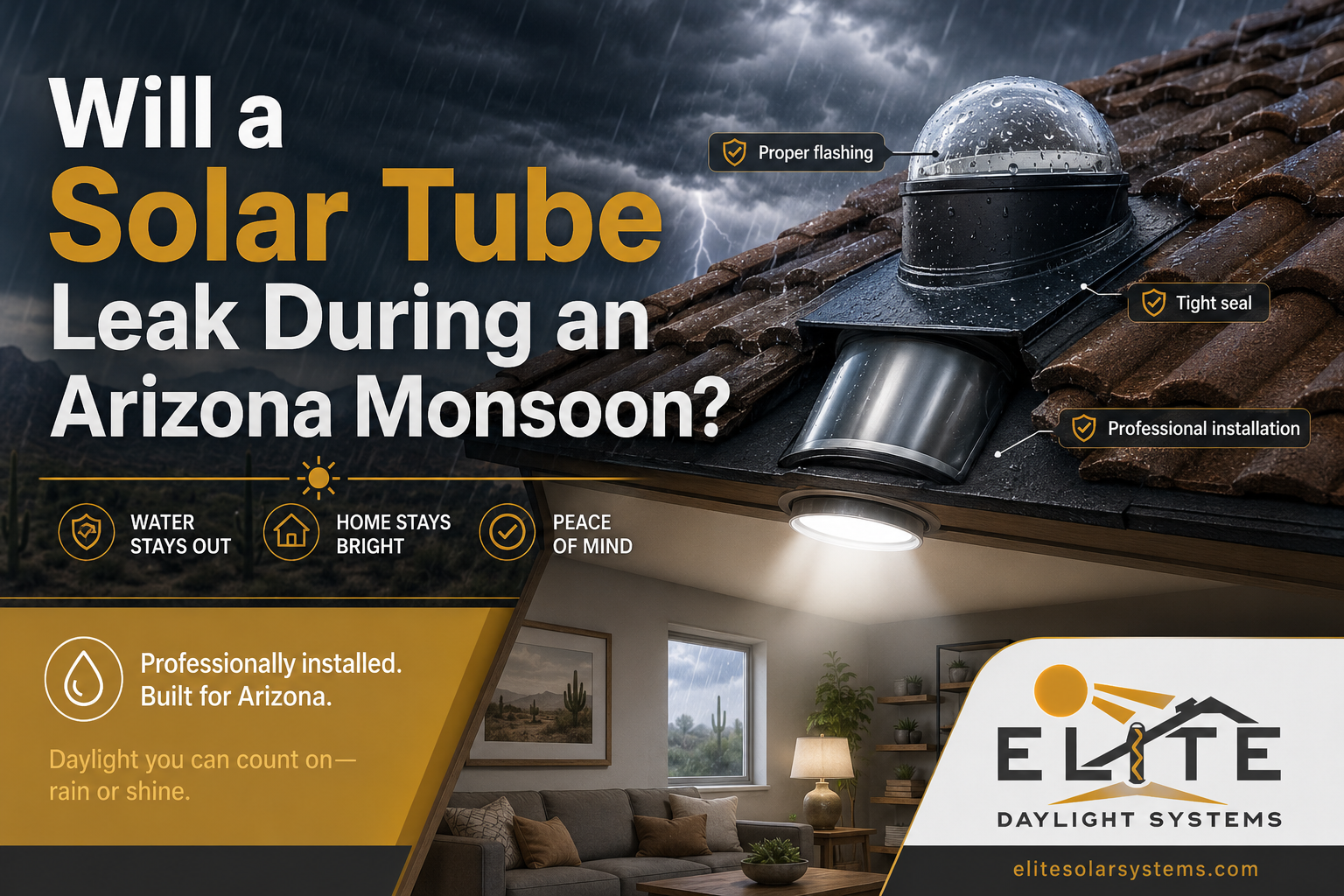
The part visible from outside is more than a clear dome. Beneath it is a flashing assembly that connects the tube to the roofing system.
Flashing gives rain a path around the opening. Water reaches the upper side, moves around the unit, and continues down the roof. For that to work, the flashing must overlap correctly with the roofing material and underlayment.
Arizona homes do not all have the same roof. Tile requires a different approach from asphalt shingles. Metal and flat roofs bring their own considerations. A product intended for one application should not simply be forced to fit another.
Roof slope matters as well. Rain moves quickly down a steep roof. On a roof with little slope, water may remain in one area longer. The installer needs to understand what the water will actually do once a storm begins.
A Tube Can Be Blamed for a Nearby Roof Problem
Suppose a homeowner notices a damp mark beside the ceiling diffuser. It seems obvious that the tube is leaking. Sometimes it is. Sometimes water entered several feet away and followed a rafter, fastener, or the outside of the tube before reaching the ceiling.
Broken roof tiles, worn underlayment, loose flashing, or damage from earlier work can all let water inside.
That is why smearing caulk around the dome is not a dependable diagnosis. Caulk may hide the symptom for a while, but it cannot rebuild damaged underlayment or correct flashing that was installed in the wrong order.
Arizona sunlight is also hard on exposed sealants. A surface patch that looks convincing in July may be cracked by the time another monsoon season arrives.
Is It Rain or Condensation?
Water near a solar tube does not always come from outdoors. Monsoon season raises the humidity, and temperature differences between the home, attic, and tube can sometimes produce condensation.
The pattern can help. A stain that grows during every storm points toward rain intrusion. Moisture that appears on humid days without rainfall could have another source.
Look for changes around the diffuser, including discoloration, soft drywall, peeling paint, or a musty odor. Do not climb onto the roof during or immediately after a storm. Wet tile is slippery, and walking on it can create more damage.
An inspection from both the room and roof is a much better idea.
Begin With the Right System
Leak prevention starts before anyone cuts the roof. The solar tube must suit the roofing material, and the flashing has to be installed as part of the roof’s water shedding system.
The condition of the roof should also be considered. Installing a new tube beside deteriorated tiles or failing underlayment does not make those older materials sound again.
Elite Solar Systems manufactures tubular skylights for different roof types and building designs. Our systems bring natural daylight into bathrooms, hallways, kitchens, offices, and other rooms that feel dark during the day.
For product information or a free estimate, call 866 772 5418 and speak with Elite Solar Systems in Chandler.
References:
https://elitesolarsystems.com/tubular-skylights-solar-tubes/
https://elitesolarsystems.com/residential/
https://elitesolarsystems.com/contact/
https://www.energy.gov/energysaver/skylights
https://bsesc.energy.gov/energy-basics/inspecting-skylights-water-damage-and-infiltration
Elite Solar Lighting & Fans Is A Solar Tube Installer Located In Arizona
Elite Solar Lighting & Fans offers residential and commercial solar tube installation services throughout the entire united states, including Arizona, California, New Mexico, and more.